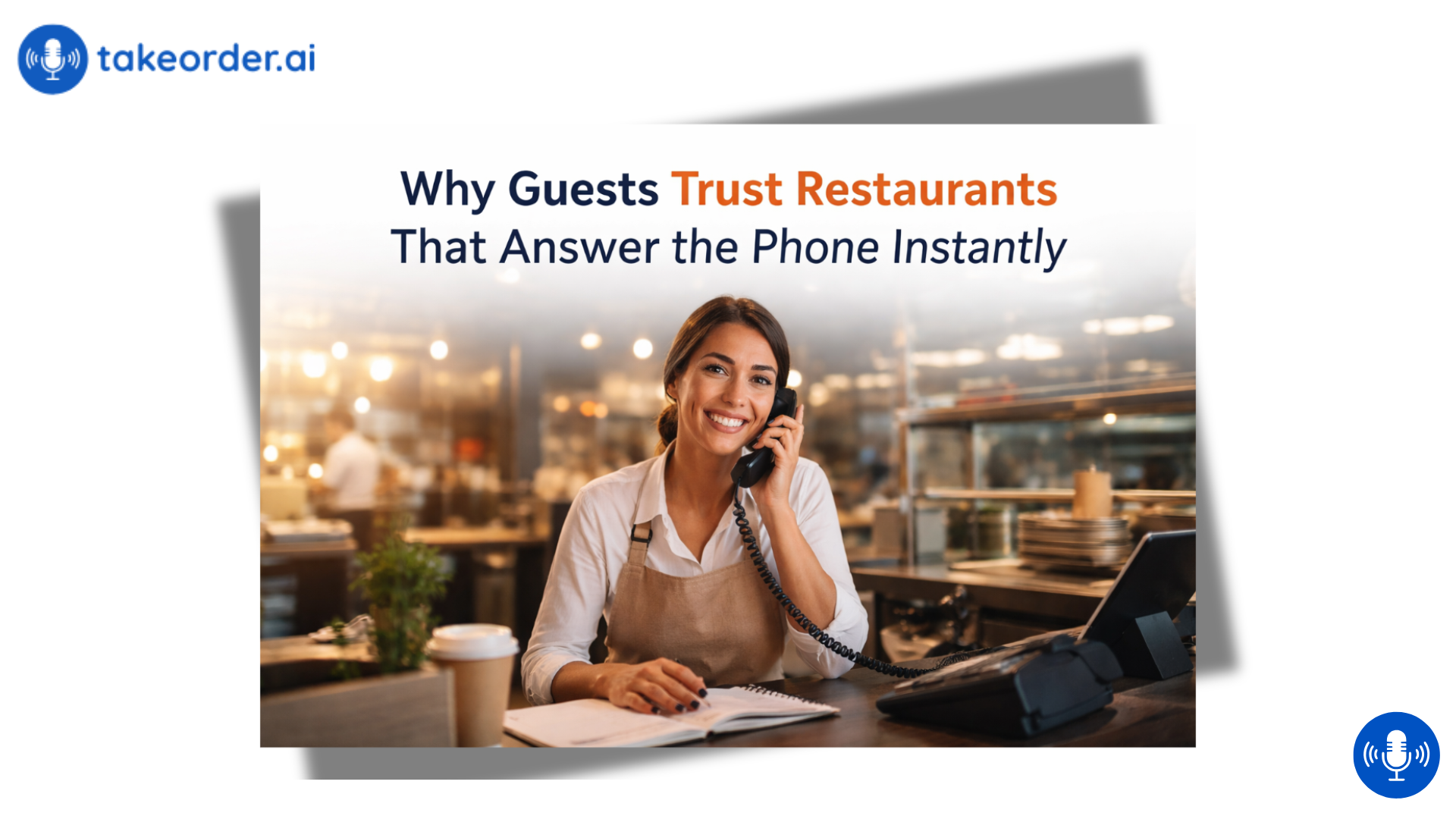
A restaurant’s reputation is rarely shaped by one dramatic moment. More often, it’s built quietly, through small interactions that happen before a guest ever tastes the food.
These moments don’t show up in photos or reviews, but they leave a lasting impression all the same. One of the most powerful of these moments happens before a guest ever sees the menu, steps inside, or smells the food. It happens when the phone rings.
For many guests, calling a restaurant is not casual. It’s a decision point. They are choosing where to spend their money, their time, and often their evening. How that call is handled, especially how quickly it’s answered, sets expectations instantly.
A fast response suggests care, organization, and reliability. A missed or delayed response introduces doubt before the experience even begins. In today’s competitive restaurant landscape, trust often forms long before the first bite.

Restaurants often view phone calls as operational tasks: answer the phone, take the order, move on. But from the guest’s perspective, a phone call carries emotion.
Guests call when something matters. They may be hungry and impatient, hosting guests at home, ordering for family, or navigating dietary needs. Some are first-time customers, unsure of what to expect. Others are loyal regulars who simply want reassurance that everything will go smoothly.
An unanswered phone creates emotional friction. Even a short delay can feel like neglect. An immediate response, on the other hand, provides reassurance before a single word is exchanged.
It signals that the restaurant is attentive, present, and prepared to help. That emotional reassurance is the foundation of trust.
Online ordering has grown rapidly, but phone calls haven’t disappeared. In fact, they remain essential because guests tend to call when something feels uncertain or important.
Phone calls are still preferred for:
In these situations, guests want clarity, flexibility, and confidence. They don’t want to guess. The phone offers a human connection that digital interfaces often can’t provide in complex scenarios.
For restaurants, this makes phone calls more than just an ordering channel. There are moments where confidence is built or lost.
Few things feel more discouraging to a guest than silence after dialing a restaurant. Being placed on hold or hearing endless ringing creates uncertainty. There’s no visual progress, no sense of how long the wait will last, and no reassurance that anyone is coming.
What makes this especially costly is how quietly guests disengage.
Most guests don’t complain. They don’t leave a negative review. They simply hang up and move on to the next option. The restaurant never knows a potential order existed, let alone that it was lost.
This invisible friction adds up quickly, especially during peak hours when call volume is highest, and staff are already stretched thin.

Every unanswered call represents more than a missed interaction. It represents missed revenue and missed opportunity.
During lunch rushes, dinner peaks, and weekends, calls often come from guests who are ready to order immediately. When those calls go unanswered, the decision to choose another restaurant happens quickly.
Over time, repeated missed calls can result in:
Because these losses happen silently, they’re easy to underestimate. But for busy restaurants, they can have a measurable impact on weekly and monthly performance.
When a phone is answered immediately, guests don’t interpret it as speed alone. They interpret it as an intention.
A calm, prompt greeting signals that the restaurant is organized and in control. That perception shapes how guests behave during the rest of the call.
They slow down, speak more clearly, and feel comfortable asking questions or clarifying details. This leads to better conversations and smoother ordering experiences.
Guests who feel acknowledged early are far more forgiving of small pauses later. The simple act of answering quickly creates goodwill that carries through the entire interaction.
Interestingly, instant response doesn’t just affect the beginning of the call; it changes how guests experience time overall. When the first moment feels smooth, guests are more patient throughout the interaction.
Short pauses don’t feel frustrating. Clarification questions feel helpful instead of inconvenient. This is why answering quickly at the start matters more than rushing the entire call. It sets the emotional tone and establishes trust that lasts through the conversation.

Most restaurants don’t ignore phone calls by choice. The challenge is structural.
During busy periods, staff are juggling:
The phone becomes one more demand competing for limited attention. Even the most well-trained teams can’t be everywhere at once.
This isn’t a failure of hospitality. It’s a limitation of human bandwidth. And callers often feel the impact of that limitation first.
Guests don’t expect perfection. What they value most is consistency.
A restaurant that answers calls instantly sometimes, but misses them at peak hours, creates uncertainty. Guests never know what to expect. Over time, that unpredictability weakens trust.
Consistency builds confidence. When guests know their call will always be answered, they stop hesitating. They call without second thoughts. That reliability becomes part of the restaurant’s identity.
Voice AI changes this dynamic by eliminating competition for attention.
With Takeorder AI, calls are answered instantly every time, regardless of how busy the restaurant is. There’s no hold music, no unanswered ringing, and no pressure on staff to juggle yet another task.
Guests are acknowledged immediately, even during the busiest rushes. That consistency creates confidence and reinforces trust with every interaction.
Instead of choosing between speed and service, restaurants get both.

Traditional voicemail systems create distance. They signal absence. Guests leave messages hoping someone will respond later, but the emotional moment has already passed.
Voice AI feels different because it responds in real time.
Guests are greeted, guided, and supported without delay. The experience feels intentional, present, and professional, qualities guests associate with good hospitality.
This is why Voice AI doesn’t feel like automation to the guest. It feels like availability.
When guests feel confident, their behavior changes in meaningful ways.
They:
This leads to:
Better communication at the start prevents problems later, saving time and reducing frustration across the operation.

Accurate phone orders don’t just benefit guests. They improve the entire workflow.
Clear orders mean fewer interruptions, smoother kitchen execution, and less last-minute scrambling. During peak hours, this stability makes a noticeable difference in staff morale and service consistency.
Over time, these improvements contribute to:
Small efficiencies, repeated daily, create meaningful operational improvements.
Guests rarely remember the exact words spoken during a phone call. What stays with them is how the interaction felt.
These emotional impressions influence whether a guest returns, recommends the restaurant, or instinctively chooses it again next time.
Trust is remembered long after the call ends.

Restaurants that consistently answer calls quickly develop a reputation for dependability. That reputation isn’t built through promotions or advertising. It’s built through repetition.
When guests repeatedly experience smooth, immediate responses, they begin to associate the brand with reliability. That perception becomes a quiet competitive advantage, especially in crowded markets where choices are endless.
With Takeorder AI, reliability becomes scalable, not dependent on staffing levels or peak-hour pressure.
Restaurants invest heavily in menus, interiors, and service training. But trust is often built in moments that feel insignificant at the time.
These moments don’t show up on receipts, but they shape guest loyalty all the same.
Trust isn’t created through bold promises or flashy experiences. It’s created through consistency.
When guests know their call will be answered every time, they feel confident choosing the restaurant again. With tools like Takeorder AI, restaurants can ensure that confidence is built without adding pressure to staff or disrupting operations.
One ring at a time, trust grows. And trust is what keeps guests coming back.
Stay updated on our news and events! Sign up to receive our newsletter.
Thank you for signing up!
Something went wrong. Please try again later.